
Chronic back pain affects millions worldwide, often leaving patients stuck in a cycle of short-term fixes. Over-the-counter painkillers, physical therapy, injections, and surgery usually mask symptoms without addressing the root cause.
Now, regenerative medicine offers a non-surgical solution that targets the source of spinal discomfort. By harnessing the body’s natural healing, these therapies support tissue repair, reduce inflammation, and promote long-term spine health.
For those avoiding invasive surgery or long-term medications, regenerative procedures provide a scientifically backed path to restore mobility and daily comfort.
What Is Regenerative Medicine for Back Pain?

To understand regenerative medicine for back pain, it helps to contrast it with standard spinal care. Conventional treatments generally operate like a structural band-aid. Pain medications block nerve signals, while surgeries like spinal fusion or discectomy mechanically alter or remove tissue to alleviate pressure. While these steps are sometimes necessary, they do not help the original tissue recover its health.
Regenerative medicine is a specialized field focused on repairing, restoring, and regenerating damaged or diseased tissues. In the context of spinal care, these therapies utilize biological materials to fix internal damage naturally. Instead of introducing synthetic chemicals, physicians harvest or concentrate naturally occurring healing agents to treat targeted areas of the spine.
This branch of medicine focuses heavily on the soft structures that stabilize the back, including:
- Intervertebral discs that act as spinal shock absorbers
- Spinal ligaments that connect bone to bone
- Facet joints that link the vertebrae together
- Tendons and surrounding muscle matrices
The primary goal of non-surgical back pain treatment through regenerative means is to change the environment of the spine from a state of progressive breakdown to a state of active healing. It looks beyond the immediate symptom of pain to provide long-term support for the entire spinal structure.
How Regenerative Medicine Works

The biological architecture of the human spine has a notable limitation. Structures like spinal discs and tendons have a very poor direct blood supply. When an injury or age-related wear and tear occurs, the body struggles to deliver enough healing factors to the site. This lack of resources often results in incomplete healing, chronic weakness, and low-grade, persistent inflammation.
Regenerative therapy alters this dynamic by delivering a high concentration of healing components exactly where they are needed. How regenerative medicine works can be broken down into three fundamental biological phases:
Overcoming Chronic Inflammation
When biological treatments are injected into an injured spinal site, they immediately alter the chemical signals in that area. They suppress pro-inflammatory proteins and introduce anti-inflammatory molecules, reducing the painful swelling that irritates spinal nerves.
Tissue Regeneration and Extracellular Matrix Repair
Once the area is stabilized, the cells begin the hard work of rebuilding. They stimulate native cells to produce essential structural components like type II collagen and proteoglycans. These compounds are critical for restoring the hydration, height, and elasticity of worn-down spinal components. Through this methodical process, spinal repair happens at a microscopic level, offering non-surgical back pain care that adapts directly to the specific damage.
Types of Regenerative Treatments

There is no single uniform approach to biological spine care. Medical professionals utilize several distinct regenerative therapy options based on the severity and location of the spinal degeneration.
PRP Therapy
Platelet Rich Plasma, widely known as PRP therapy, is one of the most accessible and heavily researched forms of orthobiologic treatment. The procedure begins with a simple draw of the patient’s own blood. The technician places this blood sample into a centrifuge, which spins at high speeds to separate its components.
This process isolates a highly concentrated layer of blood platelets, which are rich in growth factors. When a physician injects this concentrated fluid back into injured spinal ligaments or facet joints, it unleashes a cascade of natural healing signals. PRP therapy for back pain effectively soothes joint irritation and repairs minor structural tears.
Stem Cell Therapy
For more advanced structural breakdown, stem cell therapy provides a highly robust alternative. Physicians typically harvest mesenchymal stem cells from the patient’s bone marrow or fat tissue, or they obtain them from certified donor sources such as umbilical cord tissue.
Unlike regular cells, stem cells have the unique ability to transform into the specific types of cells needed for tissue repair. When carefully placed into a degenerating disc, these cells can adapt to the environment, multiply, and actively work to rebuild the fading disc matrix from within.
Growth Factor Treatments
Growth factor injections focus purely on the isolated signaling proteins responsible for cellular communication. By delivering concentrated doses of these proteins without whole cells, these treatments quickly block inflammatory pathways and accelerate tissue recovery. This makes them a strong option for calming acute flare-ups and encouraging surrounding muscle matrices to heal.
Benefits of Regenerative Medicine

- True Non-Surgical Pain Relief: Because these therapies are delivered via targeted injections using advanced imaging guidance like fluoroscopy or ultrasound, there are no surgical incisions, no hospital stays, and no risks of permanent surgical scarring.
- Support for Natural Tissue Repair: Rather than cutting away tissue or fusing joints together, which can place stress on the rest of the spine, these treatments preserve your natural anatomy and encourage genuine biological healing.
- Substantial Gains in Mobility: As underlying inflammation subsides and structural tissues regain their integrity, patients frequently report a meaningful return of their flexibility and range of motion.
- A Holistic Approach to Back Care: These procedures work in harmony with the natural mechanics of your body. They do not introduce foreign synthetic chemicals, which greatly reduces the risk of long-term systemic complications.
How Regenerative Medicine Supports Spinal Health
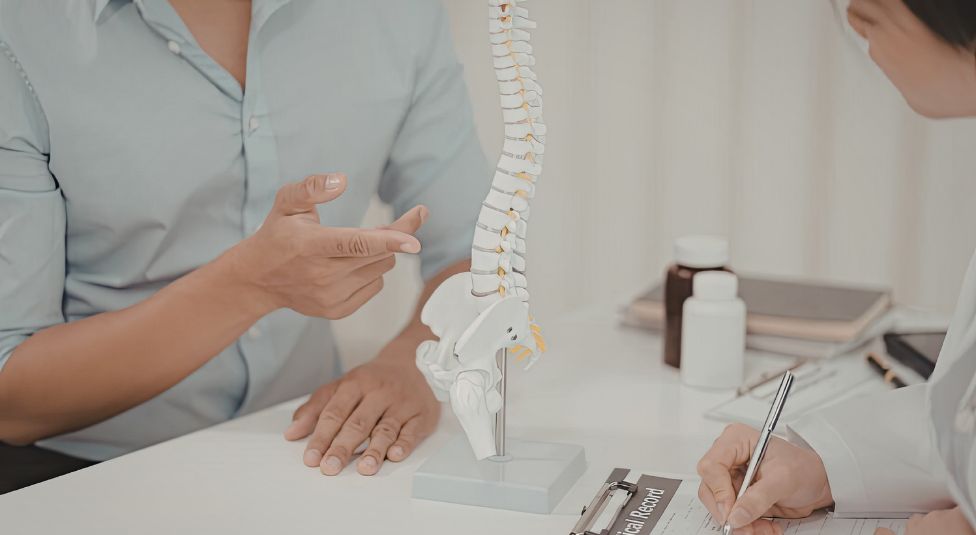
The human spine functions as a completely interconnected kinetic chain. When a single intervertebral disc loses its height due to degenerative disc disease, the alignment of the entire back shifts. This shift places an unnatural mechanical load on the surrounding facet joints and strains the spinal ligaments, leading to widespread muscular spasms and chronic discomfort.
Regenerative treatments excel because they provide comprehensive, non-surgical spinal support. When introduced to the spine, PRP and stem cell therapy do not just numb a single nerve instead, they work to restore the underlying structural stability of the treated area.
By strengthening the local ligaments and boosting the hydration of worn discs, these therapies help the spine distribute mechanical weight correctly once again. This whole-body approach stabilizes the affected segment, protects the surrounding levels of the spine from experiencing secondary wear, and establishes a foundation for lasting spinal health.
Safety and Considerations
While the promise of biological medicine is profound, practicing safe regenerative medicine requires a realistic approach and strict adherence to medical standards. These procedures are medical therapies that demand high levels of clinical precision and personalized care.
First and foremost, a successful outcome depends heavily on a comprehensive screening process. Not every type of back pain is a match for biological therapies. For instance, a severe spinal fracture or an advanced nerve compression causing sudden muscle weakness will generally require conventional surgical intervention.
Conclusion
Regenerative medicine marks a major milestone in the evolution of spinal care, moving away from simple symptom management and toward genuine tissue recovery. By providing a non-surgical, patient-centered option, treatments like PRP and stem cell therapy allow individuals to address the biological root causes of their chronic back pain.
Frequently Asked Questions
Q1: What is the biggest problem with regenerative medicine?
It is an evolving field with variable clinical guidelines, so outcomes vary based on individual health and lifestyle. Many treatments are considered innovative or off-label and may not be covered by insurance.
Q2: What is regenerative medicine for back pain?
It uses biological materials, like platelets or stem cells, to repair damaged spinal structures. Instead of surgery or drugs that mask symptoms, it targets soft tissue injuries, disc degeneration, and joint wear to promote long-term natural healing.
Q3: How does PRP therapy relieve back pain?
PRP delivers concentrated growth factors to injured areas, calming inflammation, attracting repair cells, and speeding up natural repair of ligaments, tendons, and joints.
Q4: Who is eligible for stem cell therapy for back pain?
Adults with chronic pain from degenerative disc disease, mild to moderate spinal arthritis, or ligament injuries who have not found relief from conservative treatments. Screening and imaging review are required.
Q5: Is regenerative medicine safe for chronic back pain patients?
Yes, when performed by a licensed physician with imaging guidance. Autologous therapies use the patient’s own materials, minimizing the risk of allergic reactions or rejection.