
Introduction
Knee pain is one of the most common health complaints across the world. Whether it is caused by arthritis, cartilage damage, a sports injury, or simply years of wear and tear, living with knee pain can seriously affect your daily life. Simple activities like walking to the grocery store, climbing stairs, or playing with your kids become painful challenges.
For many years, people dealing with severe knee pain had limited choices — pain medications, physical therapy, or eventually, knee replacement surgery. But medicine has moved forward, and today there is a growing option that sits between pain pills and the operating table.
Stem cell treatment for knees is a regenerative therapy that works with your body’s own natural healing system. Instead of replacing or removing damaged tissue, it encourages your body to repair and rebuild it. This approach is attracting attention from patients and doctors alike, and for good reason.
In this blog, we will break down what stem cell therapy for knees actually is, which conditions it can treat, how the procedure works from start to finish, and what real recovery looks like.
What Is Stem Cell Treatment for Knees?
To understand stem cell treatment for knees, you first need to know what stem cells are.
Stem cells are special cells in your body that do not yet have a fixed job. Unlike a muscle cell or a bone cell, stem cells are flexible — they can transform into different types of cells depending on what your body needs. Think of them as blank-slate builders that can become cartilage, bone, muscle, or connective tissue.
Regenerative medicine is the field of healthcare that uses these cells to heal damaged tissue. Instead of just masking pain, the goal is to trigger actual biological repair.
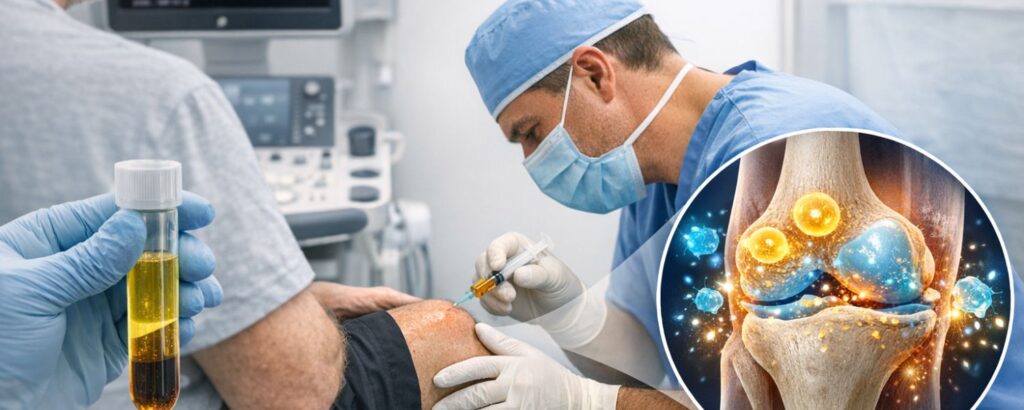
In the context of the knee, stem cell therapy for knees works by introducing concentrated healing cells directly into the damaged joint. Once there, these cells get to work in a few different ways. They can develop into fresh cartilage cells to replace worn-down tissue. They can also release proteins that slow the breakdown of existing cartilage and calm down the inflammation that makes arthritis pain worse.
This is why stem cell treatment for knees is so different from a steroid injection, which simply dulls the pain temporarily, or knee replacement surgery, which removes the joint entirely. Stem cell therapy addresses the root of the problem by supporting your body’s ability to actually heal.
Conditions That Can Be Treated With Stem Cell Therapy

Stem cell therapy is not a single-condition treatment. It has shown potential across a wide range of knee problems, making it worth discussing with your doctor if you are dealing with any of the following:
Knee Osteoarthritis is the most common reason people explore stem cell treatment for knees. In this condition, the cartilage that cushions the knee joint gradually wears away, leaving bone rubbing against bone. Stem cells may help regenerate the lost cartilage and reduce the painful inflammation that comes with it.
Cartilage Damage from injury or repetitive strain can be difficult to treat because cartilage has a very limited blood supply and heals slowly on its own. Stem cell therapy for joint pain introduces cells that can encourage new cartilage growth in damaged areas.
Meniscus Tears are among the most common sports-related knee injuries. The meniscus acts as a shock absorber in the knee, and when it tears, movement becomes painful and unstable. Stem cell injections can help support healing in torn meniscus tissue.
Ligament Injuries, including damage to the ACL or other supporting ligaments around the knee, may also benefit from regenerative cell therapy by promoting tissue repair and reducing inflammation.
Chronic Knee Inflammation that does not respond well to conventional treatments is another area where this therapy is being explored, particularly when the inflammation is driving ongoing pain and stiffness.
Sports-Related Knee Injuries across many different types — from overuse injuries in runners to impact injuries in contact sport athletes — are increasingly being managed with regenerative approaches as an alternative to surgery or long rehab periods.
How Stem Cell Treatment for Knees Works
If you are considering this therapy, it helps to know exactly what the procedure involves. Here is a clear, step-by-step breakdown:
Step 1 — Collecting the Stem Cells
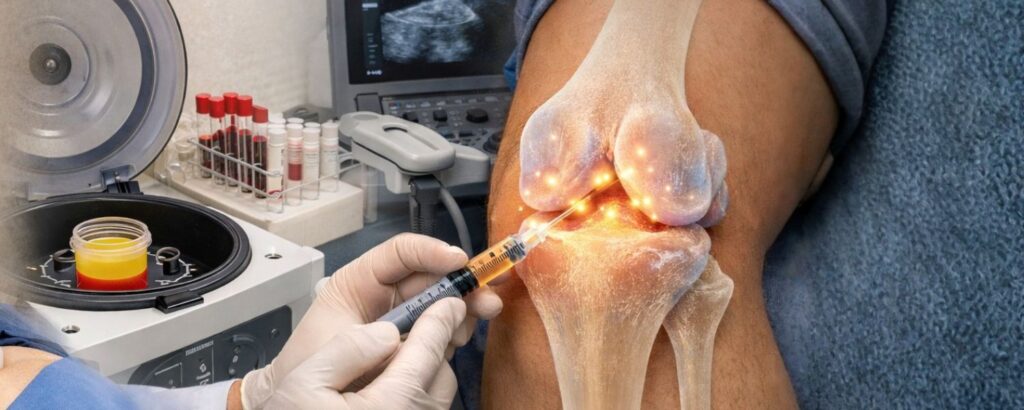
The stem cells used in this procedure come from your own body, which is one reason the therapy is considered low-risk. The two most common sources are bone marrow (usually drawn from the hip bone) and adipose tissue, which is fat tissue typically taken from the abdomen or thigh area. Both sources contain concentrated populations of healing cells.
Step 2 — Processing and Concentrating the Cells
Once collected, the sample is placed in a centrifuge machine that spins at high speed. This process separates the stem cells from other material and concentrates them into a much more potent solution. This concentration step is important because it ensures the injection contains a therapeutic level of active cells.
Step 3 — Injecting Into the Knee Joint
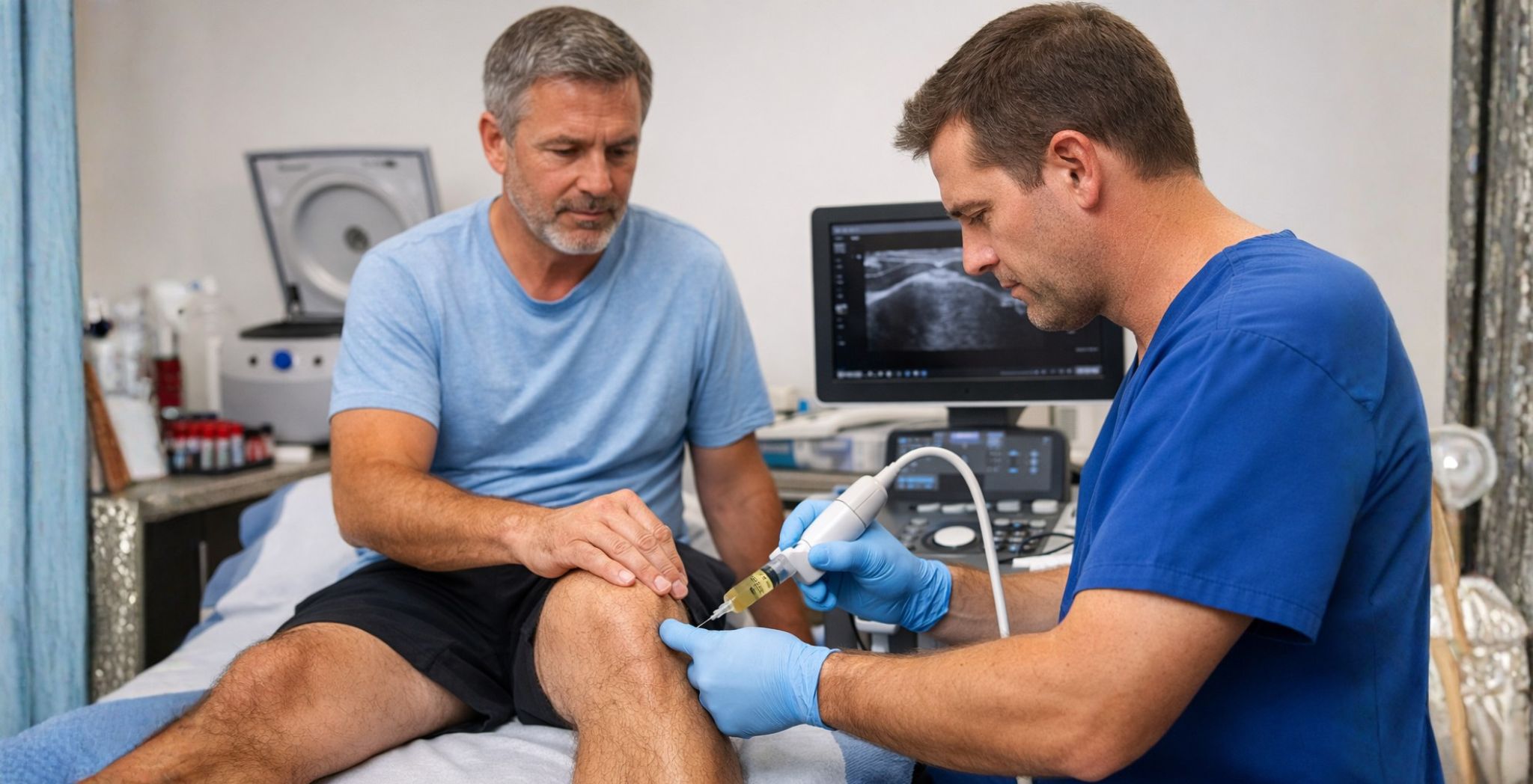
Using imaging guidance such as ultrasound to ensure precision, the doctor injects the concentrated stem cells directly into the affected area of the knee. The procedure itself is typically done on an outpatient basis and takes less than a couple of hours from start to finish.
Step 4 — The Healing Process Begins
Once inside the joint, the stem cells begin interacting with the damaged tissue. They may develop into new cartilage cells, suppress local inflammation, and release growth-promoting proteins that signal the body to repair itself. This process is gradual and continues over several weeks and months following the procedure.
Benefits of Stem Cell Treatment for Knees

The growing interest in stem cell treatment for knees comes down to a compelling set of advantages, especially for patients who are not ready for surgery or who want to explore every option before going under the knife.
It is non-surgical. There are no incisions, no general anesthesia, and no serious risks that come with major surgical procedures like blood clots, post-operative infection, or implant rejection.
It targets pain at the source. Rather than simply blocking pain signals, this therapy works to address the underlying tissue damage causing the pain.
It supports cartilage regeneration. This is something that conventional treatments, including steroid injections and anti-inflammatory drugs, simply cannot do. Stem cell therapy for knees is one of the few options with the biological potential to actually restore cartilage.
It reduces inflammation. Chronic knee inflammation is a major driver of pain and stiffness, and the cells introduced during this therapy have natural anti-inflammatory properties.
Recovery is much faster than surgery. Patients typically return to light activity within a few days rather than facing months of rehabilitation. This is a major quality-of-life difference.
It uses your own cells. Because the stem cells come from your own body, the risk of rejection or allergic reaction is minimal.
Stem Cell Therapy vs. Knee Replacement Surgery
For many patients, the decision comes down to this comparison. Here is how the two approaches differ:
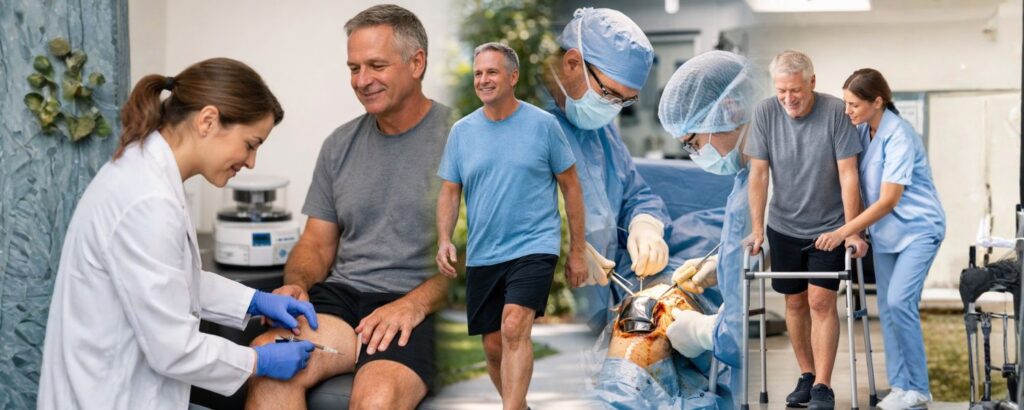
Stem cell therapy is minimally invasive. It uses your own regenerative cells to encourage the body to heal itself. There are no incisions and no general anesthesia. Recovery downtime is measured in days, and patients can often return to desk work and light daily activities almost immediately. The long-term goal is to preserve the natural knee joint.
Knee replacement surgery is a major procedure. It involves removing the damaged joint surfaces and replacing them with artificial components. Recovery typically takes three to six months of rehabilitation, and there are real surgical risks, including infection, blood clots, and the possibility that the artificial joint may eventually need replacing again.
That said, knee replacement remains the gold standard for severely deteriorated joints. Stem cell therapy is generally most effective for moderate damage, and it is not appropriate for every patient. This is why a consultation with a qualified specialist — such as those offering stem cell treatment for knees in Utah and other centers across the country — is so important before making any decisions.
Recovery and Expected Results

One of the biggest appeals of stem cell therapy for knees compared to surgery is the recovery experience. Most patients go home the same day as the procedure. There may be mild soreness at the injection site for a day or two, but serious downtime is uncommon.
Improvement is gradual. Unlike a painkiller that provides immediate relief, regenerative therapy works over time. Most patients begin noticing meaningful changes in pain and joint function between six and twelve weeks after treatment, with continued improvement over the following months as tissue repair progresses.
Stem cell therapy recovery is generally supported by a gentle physical therapy program. Strengthening the muscles around the knee helps protect the joint and supports the regeneration process. Your doctor will typically provide specific guidance based on your age, activity level, and the extent of your knee damage.
It is worth noting that results vary. Some patients experience significant pain relief and improved mobility. Others see more modest gains. Age, overall health, and the severity of the knee condition all influence outcomes. This is also why stem cell therapy for back pain and other joint conditions is being studied — the results in knees have encouraged researchers to explore its potential across multiple areas of musculoskeletal care.
Conclusion
Living with knee pain does not have to mean choosing between daily discomfort and major surgery. Stem cell treatment for knees represents a meaningful middle ground — a scientifically grounded, minimally invasive approach that works with your body’s natural ability to heal.
Whether you are dealing with osteoarthritis, a sports injury, cartilage wear, or chronic knee inflammation, stem cell therapy for knees may offer a path toward reduced pain, better mobility, and a healthier joint for years to come.
The most important next step is a conversation with a qualified medical professional. Not every patient is a candidate, and the best results come from a carefully evaluated, personalized treatment plan. If you are curious whether this therapy is right for you, reach out to a regenerative medicine specialist and take the first step toward getting your life back.